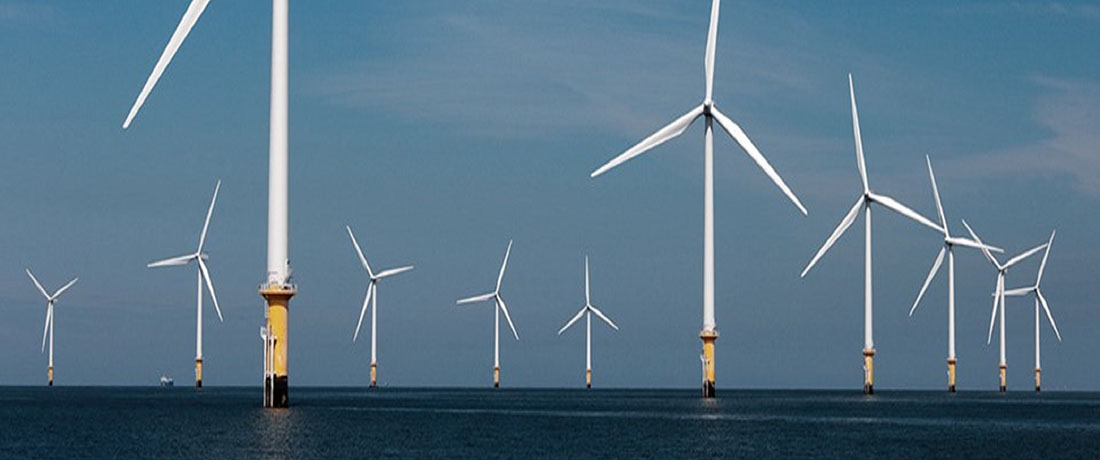
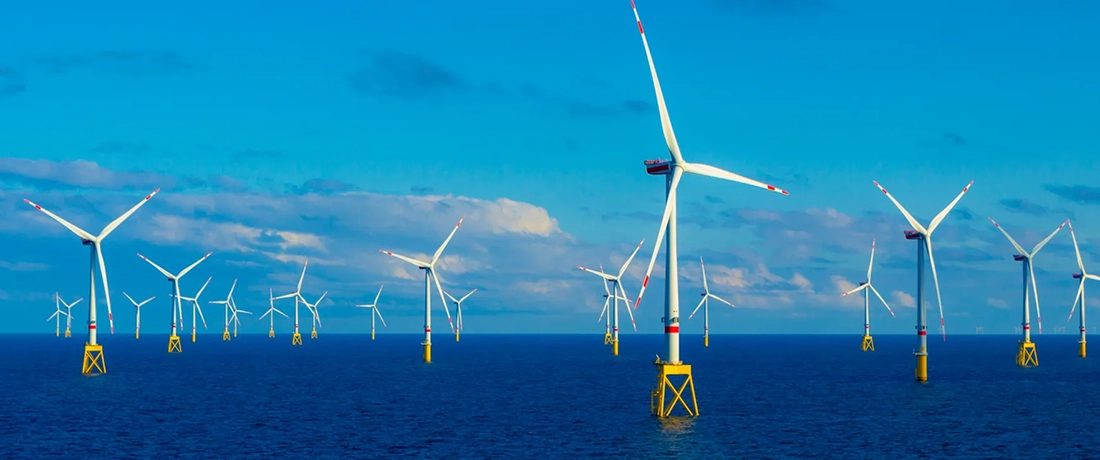
Brazilian officials have formed an offshore wind working group to effectively regulate and implement new renewable energy.
The National Energy Policy Council approved a resolution on Wednesday, creating the Offshore Wind Working Group (GT-EO), coordinated by the Ministry of Mines and Energy, with the participation of 23 industry institutions.
Alexandre Silveira, the minister for Mines and Energy, said: “We are creating the regulatory foundations to transform the potential of offshore wind into a concrete reality for Brazil.
“This is a historic opportunity to generate jobs, income, and sustainable development, placing the country at the global forefront of clean energy.”
Brazil’s offshore wind generation potential is estimated at more than 1,200GW, with 104 environmental licensing requests currently being processed by the Brazilian Institute of Environment and Renewable Natural Resources.
The expansion of offshore wind power could generate up to 516,000 full-time jobs by 2050 and add around £125 billion to the country’s GDP over the same time period.
The creation of the GT-EO seeks to establish the infra-legal framework at the federal level that will address issues such as prior location definition, rules for requesting a Declaration of Prior Interference, technical and economic-financial qualification criteria and applicable sanctions in case of non-compliance.
Phased deliveries are also planned, including technical studies on the coexistence of offshore wind energy and fishing activities, navigation safety, port requirements, as well as proposals for process digitalisation and the creation of a Single Offshore Area Management Portal.
Gustavo Ataíde, the secretary of Energy Transition at the MME, told TGS | 4C that the GT-EO has a deadline of 270 days to deliver its results, giving the group around nine months to action Brazil’s next steps toward its large-scale offshore wind uptake.
“In the first decree of next year, the group will present the proposed decree after this discussion with those involved,” he said.
“From there, it will be processed within the federal government.
“By the end of the first half of 2026, the idea is to have a broader report, containing all the diagnoses related to the need for action in public policies and bringing the next steps for the consolidation of this source in the country.”